LISTENING AND LEARNING
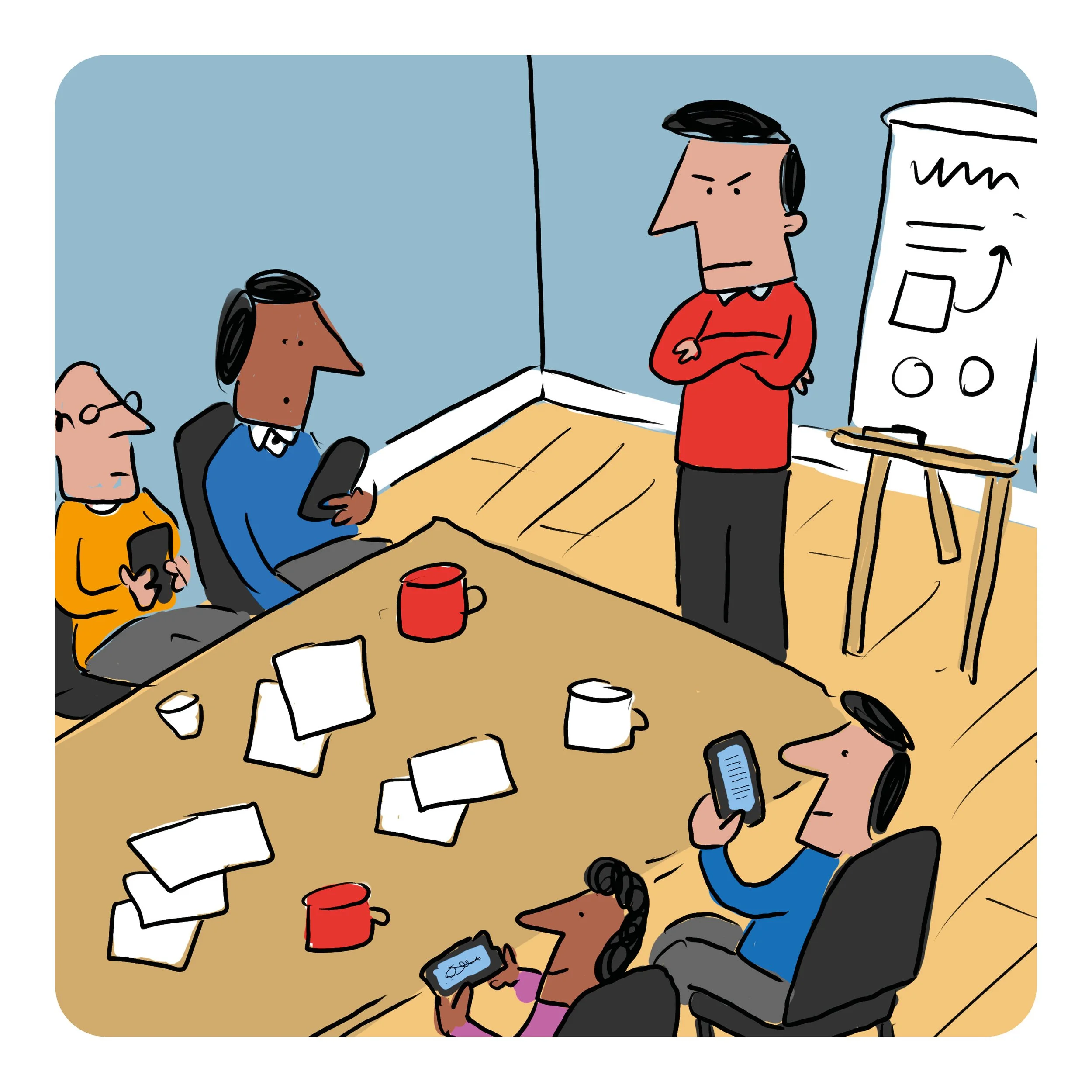
It was one of those workshops with around 30 attendees, sitting with six to a table. I was facilitating the workshop, and the Tables were taking it in turns to make suggestions in response to the question they had been asked to grapple with.
So Table 1 takes its turn. Interesting suggestions, which I dutifully capture on a flip chart. I love a flip chart. Do people still use flip charts? Anyway, I digress.
Now, as you might imagine, it’s the turn of Table 2. They start to make useful suggestions as well. Great! Except that out of the corner of my eye I can see the folk (be honest Martin – they were all men) on Table 1.
All of them – all six of them – have got their phones out and are looking at them!
They have said their piece, right? They are really important (men), and they expect other attendees will have listened to what they have to say. But are they interested in what Table 2 has to say? Not in the slightest.
So I stop the workshop. I call out the behaviour. It’s all pretty awkward for a while. But I can say with some certainty that we got input from all the other Tables without any phones coming out.
Yes, it was rude. Yes, it was embarrassing. But more than that, it said quite clearly that “I don’t expect to learn anything by listening to you”.
Ever been sat round a table where one person has had their say, and then you think it might be your turn to be heard? And it rapidly becomes clear that the previous speaker is indeed a speaker and not a listener? Me too.
Listening is widely spoken of as being a gift we can bring to others. As in “to be truly listened to is one of the greatest gifts we can receive”.
And yes, that’s true. I think it goes further than that, though.
Because if I actually listen to you, not only do you benefit by being able to voice something and quite often see that thing clearly for the first time. But (surprise surprise) I can also benefit. I give myself a chance of learning something from what you say.
Listening is also learning. It’s a two-way street.
The American psychiatrist and founder of Cognitive Behavioural Therapy, Aaron Beck, had a phrase that went "Stop it and give yourself a chance”. The idea being that if we can pause between the stimulus and response in life, we might come up with better responses.
I suggest that if we can stop, be quiet, and listen, we give BOTH of us a chance. A chance for both of us to learn something new. What a shame then, that it seems to be so rare
Your Best Self
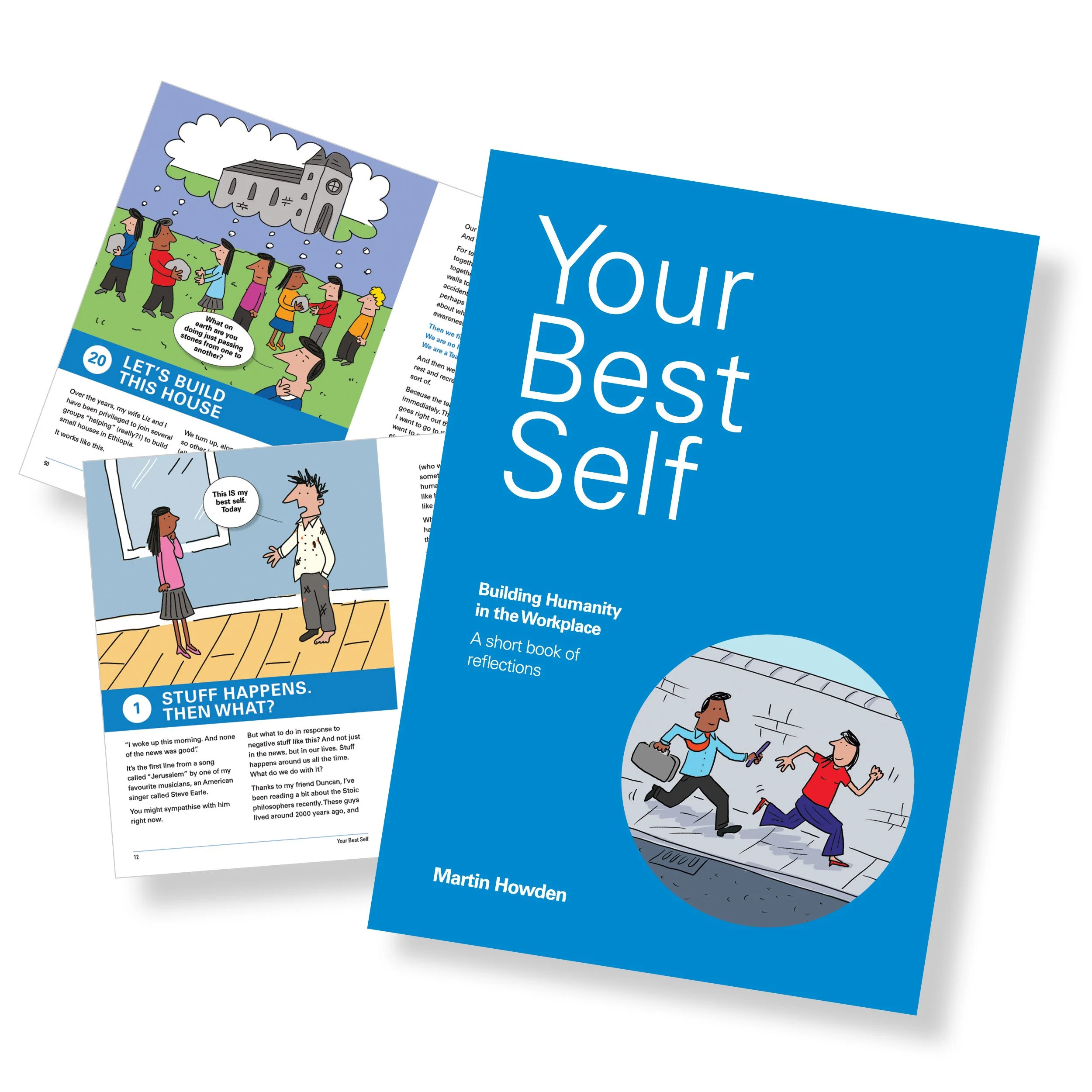
“Your Best Self” is a collection of 20 reflections like this one, with the common thread of how we can create greater humanity in our interactions with each other. It can be used either by teams or by individuals. To get your copy just follow the link: